What needs to be prepared, from which materials, and how far has the work progressed? A workshop or kitchen needs more than an order total: the product, components, quantity and responsibility must be clear.
 Workshop example: a product with several components
A workshop prepares ten kits, each containing one body and four fasteners. Before starting, the team checks the bill of materials (BOM) and component availability. Consumption differences are analysed in the context of the job rather than hidden in an aggregate stock balance.
This is a demonstration planning scenario. Product structures, units, consumption rules and required documents are defined around the company’s actual workflow.
Kitchen example: orders reach the preparation station
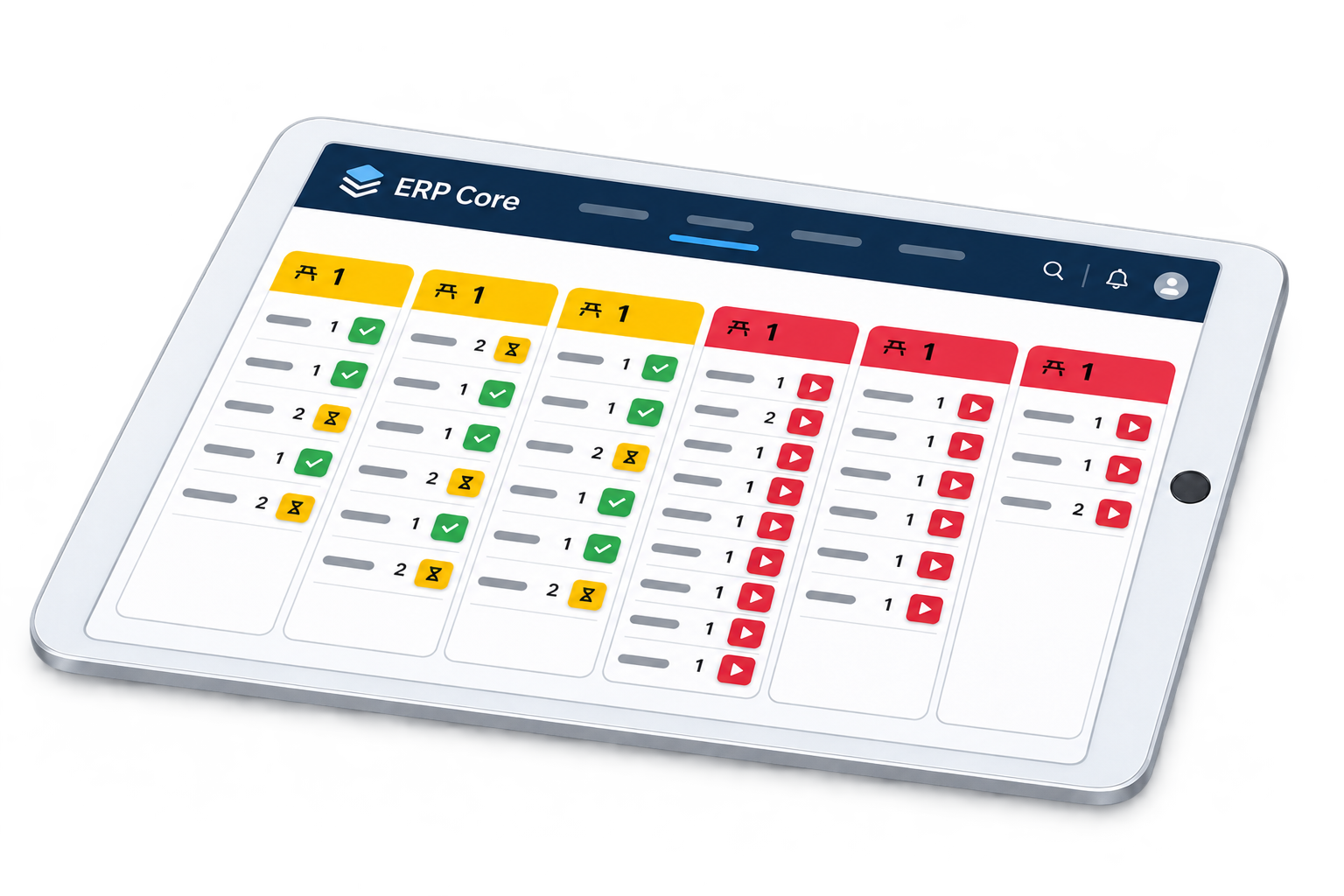
In hospitality, a dish and recipe play roles similar to a manufactured product and its components. Manufacturing Screen shows the team the items to prepare, quantities and order context.
Follow the preparation status of each dish
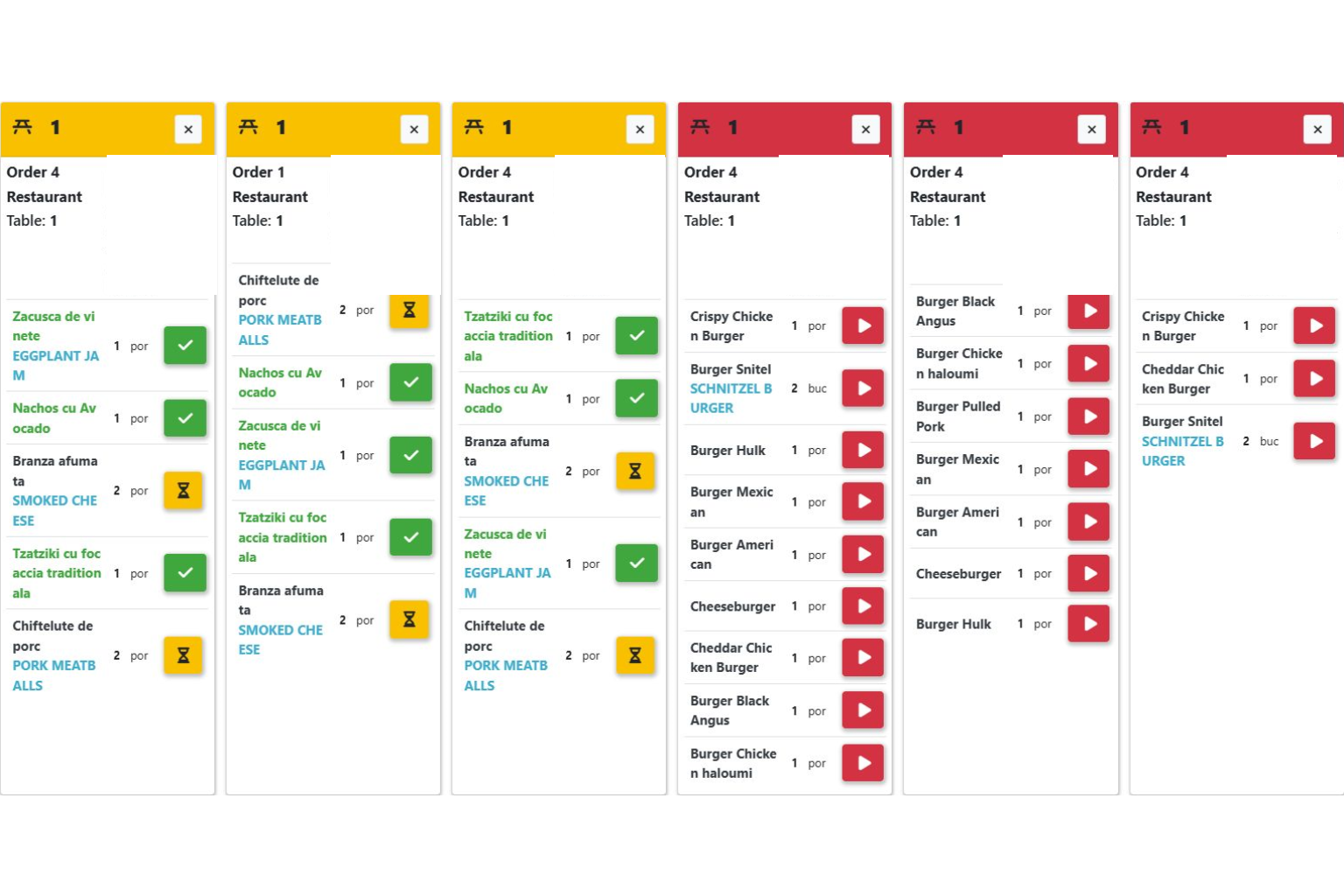
The demonstration screenshot groups orders into cards. Start, in-progress and completion symbols distinguish visible states. Before advancing a line, the operator checks the product, portions and workstation.
Connect preparation with inventory and receiving
Start with receiving materials and checking inventory. For each demonstrated product, we clarify when consumption is recorded, how differences are handled and which documents result. These rules depend on implementation.
What should you bring to a useful demonstration?
- A representative product or dish and its component list.
- A sample order and completed quantity.
- The stations and people involved in preparation.
- A difficult case: a missing material, changed quantity or rework.